
Flights and Customs Basics for Spain
Navigating the logistics of air travel and customs is a critical first step for any foreign national moving to or visiting Spain. As of 2026, several significant changes to European border management systems have been fully implemented, affecting how non-EU citizens enter the country. This guide outlines the current procedures for flights, baggage regulations, and mandatory declarations at Spanish borders.

Entry Requirements and Border Control
Spain is a member of the Schengen Area, which allows for border-free travel between participating European countries. However, for those arriving from outside the Schengen zone, new digital systems govern entry. The Entry/Exit System (EES) now records the biometric data (fingerprints and facial images) of all non-EU nationals upon arrival.
ETIAS for Visa-Exempt Travelers
Foreign nationals who do not require a visa to enter the Schengen Area must now possess a valid ETIAS (European Travel Information and Authorisation System) permit. This electronic authorization is linked to the traveler’s passport and is valid for up to three years or until the passport expires.
- Application Cost: 7 EUR ($7.35 USD, Jan 2026) for adults; individuals under 18 or over 70 are exempt from the fee.
- Processing Time: Usually issued within minutes, though complex cases can take up to 30 days.
- Official Portal: Official ETIAS Website.
Major Spanish Airport Hubs
Most international flights to Spain land at one of the country's primary hubs managed by Aena (Aeropuertos Españoles y Navegación Aérea). These airports provide extensive connections to both major cities and coastal regions.
- Adolfo Suárez Madrid-Barajas (MAD): The primary gateway for transatlantic flights and the largest airport in Spain.
- Josep Tarradellas Barcelona-El Prat (BCN): The main hub for the Mediterranean coast and Catalonia.
- Málaga-Costa del Sol (AGP): Frequently used by residents moving to the southern regions of Andalusia.
- Palma de Mallorca (PMI): A central hub for the Balearic Islands.
Customs Regulations and Duty-Free
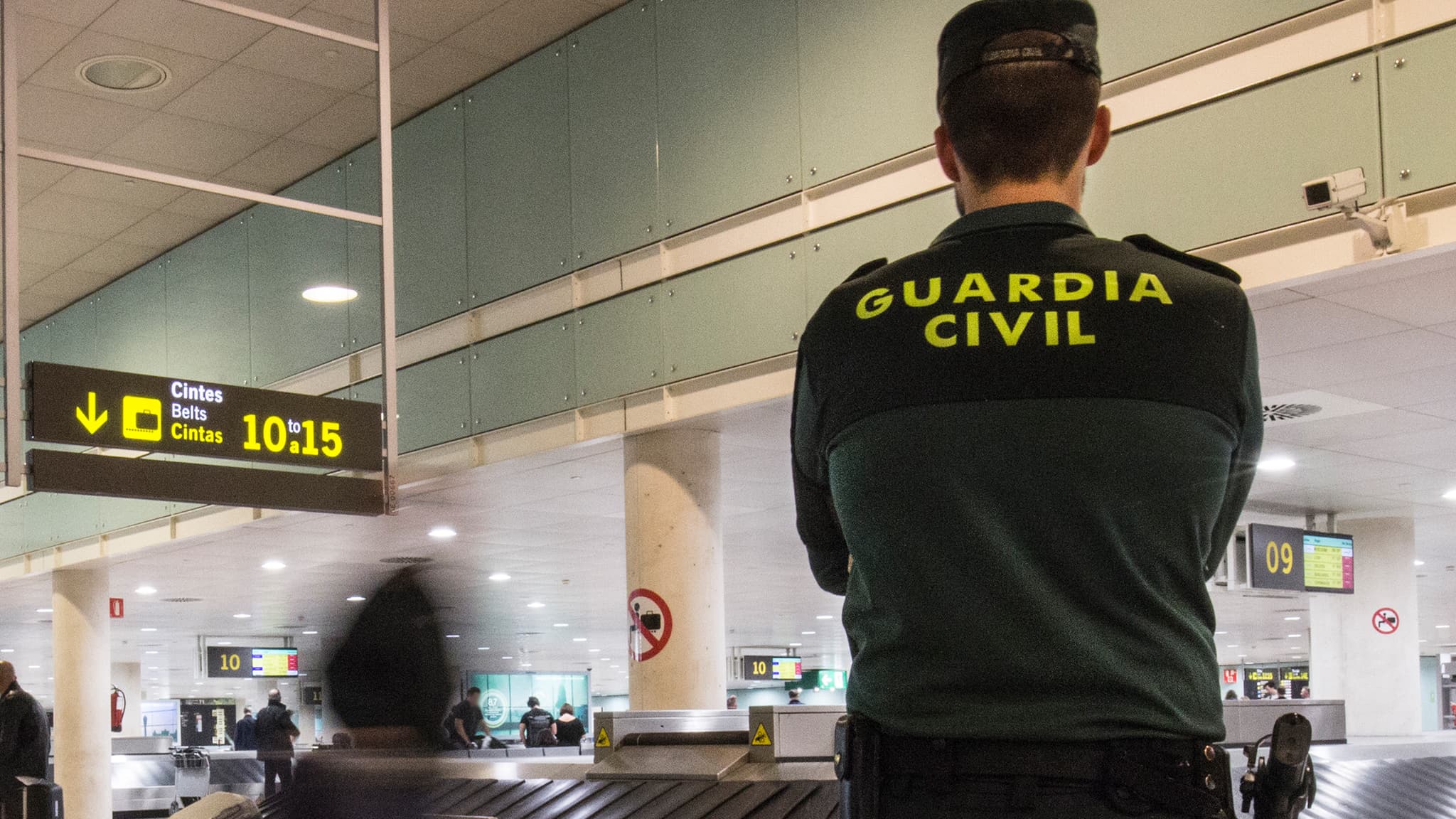
Upon landing, passengers must choose between the "Green Channel" (Nothing to Declare) or the "Red Channel" (Goods to Declare). Spanish Customs (Aduanas) enforces strict limits on items brought from outside the European Union.
Allowances for Non-EU Travelers
Travelers arriving from non-EU countries are permitted to bring a limited quantity of goods for personal use without paying Value Added Tax (VAT) or customs duties. If limits are exceeded, the goods must be declared and the corresponding taxes paid.
- Tobacco: 200 cigarettes, 100 ramekins, 50 cigars, or 250g of tobacco.
- Alcohol: 1 liter of spirits (over 22% ABV) or 2 liters of fortified wine. Additionally, 4 liters of still wine and 16 liters of beer are permitted.
- Other Goods: Up to a total value of 430 EUR ($451.50 USD, Jan 2026) for air travelers.
Currency and Cash Declarations
There are no limits on the amount of money you can bring into Spain, but large sums must be declared to the Agencia Tributaria (Tax Agency) to prevent money laundering and illegal activities.
Any traveler entering or leaving Spain with 10,000 EUR ($10,500 USD, Jan 2026) or more in cash (or its equivalent in foreign currency/negotiable instruments) must file a Form S-1 declaration.
Failure to declare these funds can lead to the seizure of the money and significant administrative fines. The declaration can be made online via the Agencia Tributaria website or at the customs office at the airport.
Importing Pets and Animals
For many foreign nationals moving to Spain, bringing a pet is a priority. Spain follows the EU harmonized rules for the non-commercial movement of pet animals (dogs, cats, and ferrets).
Requirements for entry from non-EU countries:
- Microchip: The animal must be identified with an ISO-compliant microchip.
- Rabies Vaccination: A valid vaccination administered after the microchip insertion.
- Health Certificate: An animal health certificate issued by an official veterinarian in the country of origin within 10 days of arrival in Spain.
- Blood Titer Test: Required if arriving from "high-risk" countries regarding rabies.
Medication and Prohibited Items
Travelers are permitted to bring medication for personal use during their stay. It is recommended to carry no more than a three-month supply. All medication should remain in its original packaging and be accompanied by a copy of the doctor's prescription or a medical report in Spanish or English.
Restricted and Prohibited Items
Spain strictly prohibits the entry of certain items to protect the local environment and public health:
- Meat and Dairy: Bringing meat or milk products from non-EU countries is generally prohibited.
- Plants and Seeds: Many plants, fruits, and vegetables require a phytosanitary certificate to prevent the spread of pests.
- Endangered Species: Items made from protected wildlife (ivory, certain skins) are strictly banned under CITES regulations.
Practical Steps Upon Arrival
Once you have cleared passport control and collected your baggage, follow these steps to ensure a smooth transition:
- Validate Documentation: If you are entering on a long-stay visa (e.g., Digital Nomad or Golden Visa), ensure your passport is clearly stamped. This stamp is vital for your subsequent residency application (TIE).
- Tax Declaration: If you have goods to declare, proceed to the "Red Channel" before exiting the baggage claim area.
- Onward Travel: Major airports are connected to city centers via the Cercanías (suburban train), Metro, or official airport buses (Aerobús).