
Living in Granada, Spain: City Profile for Foreign Nationals
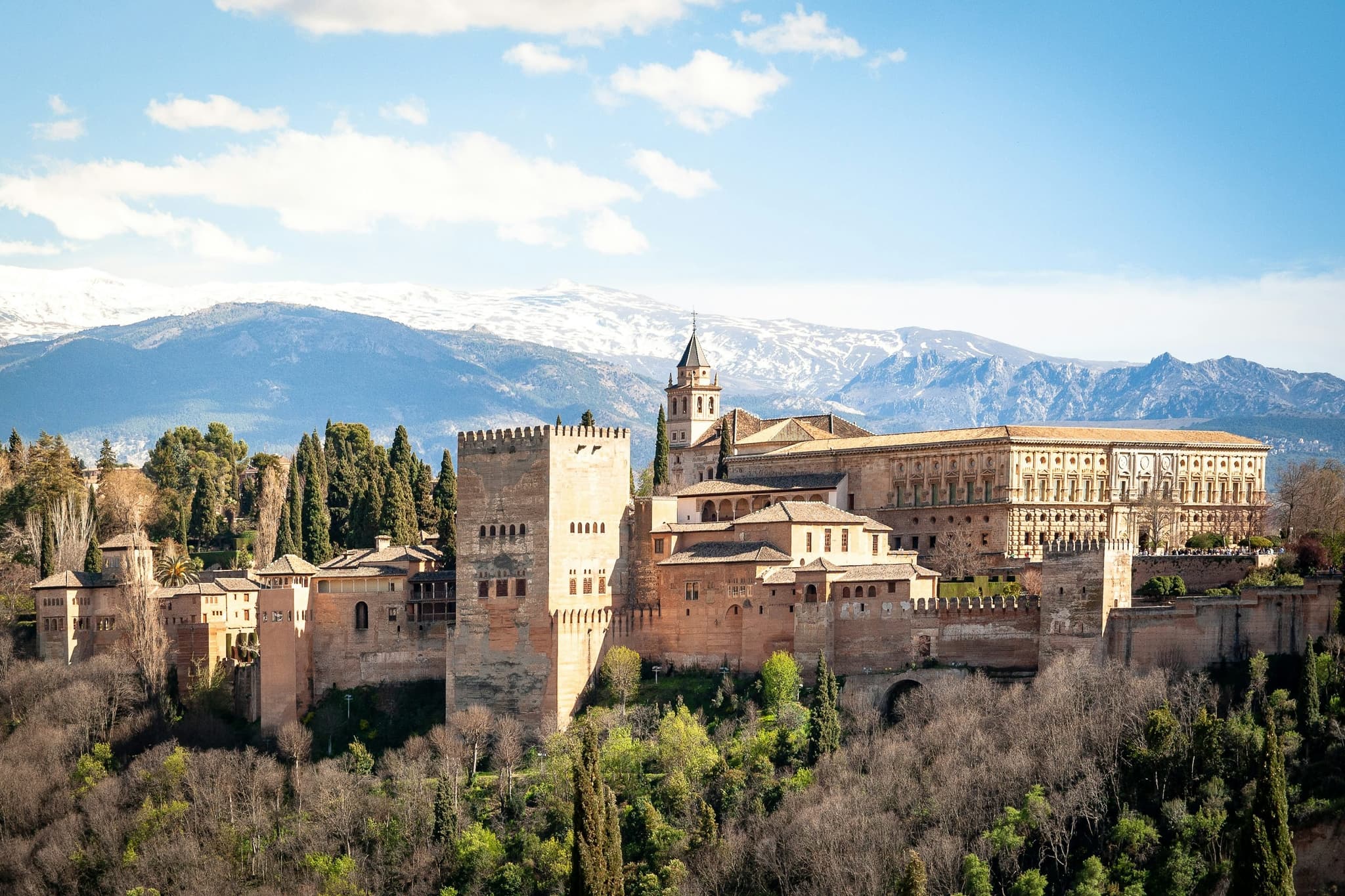
Granada is a mid-sized city located in the autonomous community of Andalusia, at the foot of the Sierra Nevada mountains. Known historically as the last stronghold of the Moorish kingdom in Spain, it currently functions as a major university hub and a center for tourism. For foreign nationals, Granada offers a distinct balance of lower living costs compared to Madrid or Barcelona, a significant international student population, and a specific climate influenced by its high altitude.
Geography and Climate
Granada sits at an elevation of 738 meters (2,421 feet) above sea level. This altitude creates a continental Mediterranean climate that differs from the coastal cities of Andalusia.
- Summers (June–September): Characterized by intense dry heat. Daily highs frequently exceed 35°C (95°F) and can reach 40°C (104°F). However, nights are generally cooler than in coastal areas due to the altitude.
- Winters (December–February): Significantly colder than Málaga or Seville. Temperatures at night often drop near 0°C (32°F), and frost is common. The nearby Sierra Nevada ski resort is operational during these months.
- Spring and Autumn: generally considered mild, with variable rainfall.
Population and Demographics
The municipality of Granada has a population of approximately 233,000 inhabitants, while the metropolitan area encompasses around 573,000 people. The demographics are heavily influenced by the University of Granada (UGR), which hosts over 60,000 students, including a large intake of international Erasmus students annually.
The registered foreign population in the province is approximately 11.6%. The largest communities of foreign nationals originate from Morocco, Colombia, Romania, the United Kingdom, and Italy.
Administrative Procedures for Foreigners
Foreign nationals residing in Granada must handle residency and administrative tasks at specific government offices. Procedures differ for EU/EEA citizens and non-EU citizens.
Foreigners Office (Oficina de Extranjería)
Most residency applications (TIE issuance, EU registry certificates) are processed at the main Foreigners Office. Appointments (cita previa) are mandatory and must be booked online through the government portal.
- Address: Calle San Agapito, 2, 18013 Granada.
- Function: Processing of residence permits, student visas, and EU citizen registration.
Municipal Registration (Empadronamiento)
Registering your address with the City Hall (Ayuntamiento) is a mandatory step for accessing public healthcare and schooling. This is done at the Oficinas de Registro of the Ayuntamiento de Granada.
- Main Office: Plaza del Carmen, s/n, 18009 Granada.
- District Offices: Available in neighborhoods like Zaidín and Chana (appointments required).
Neighborhoods and Districts
Housing options in Granada vary significantly by district in terms of price, noise levels, and accessibility.

Albaicín
A UNESCO World Heritage site featuring narrow, winding cobblestone streets. While historically significant and visually distinct, it can be logistically difficult for daily living due to restricted car access and steep inclines. Internet fiber optic coverage is limited in some specific older streets.
Realejo
The old Jewish quarter located at the foot of the Alhambra. It is popular among international residents and younger locals. It offers a central location with a high density of bars and cafes but suffers from limited parking.
Centro and Ronda
The modern commercial center (Centro) and the area along Camino de Ronda offer standard apartment blocks with elevators and heating. These areas are well-connected by the Metro and bus lines, making them popular for students and professionals seeking practical amenities.
Zaidín
A working-class, residential district south of the center. It is generally more affordable and houses the Health Technology Park (PTS) and the new hospital. It is well-connected to the center by Metro.
Housing and Rent Costs
Granada is considered one of the more affordable provincial capitals in Spain. Rental prices fluctuate based on the academic calendar, with high demand in September and January.
Note: Prices below are estimates based on market data from late 2025. Currency conversions are calculated at an approximate rate of €1.00 = $1.04 USD (January 2026).
- 1-Bedroom Apartment (City Center): €600 – €800 ($624 – $832 USD) per month.
- 3-Bedroom Apartment (Outside Center): €750 – €950 ($780 – $988 USD) per month.
- Room in a Shared Flat: €300 – €450 ($312 – $468 USD) per month, usually including some utilities.
Deposits (fianza) are typically equivalent to one or two months of rent. Proof of solvency (work contract or bank statement) is standard for long-term leases.
Transportation
Granada is a compact city where walking is often the most efficient mode of transport for the center. However, a public network exists for longer distances.
City Buses (Rober)
The bus network covers the entire city. Users can purchase a "Credibús" travel card (available on the bus usually for a deposit or at tobacco shops) which lowers the fare significantly compared to single tickets.
- Standard Single Ticket: €1.60 ($1.66 USD).
- Trip with Credibús: Approximately €0.45 ($0.47 USD) depending on current government subsidies.
Metro de Granada
A single light-rail line connects the north of the city (Albolote/Maracena) to the south (Armilla), passing through the bus station, train station, Camino de Ronda, and the PTS hospital and university area.
Train and Air
- Train: The AVE (High-Speed Train) connects Granada to Madrid (approx. 3.5 hours) and Barcelona.
- Airport: Federico García Lorca Granada-Jaén Airport (GRX) offers domestic flights and limited international connections. Málaga Airport (AGP) is the major international hub, located about 90 minutes away by bus.
Cost of Living
The cost of living in Granada is generally lower than the Spanish national average.
Food and Dining: Granada is famous for its tapas culture. In most bars, a small plate of food is served free of charge with every alcoholic or non-alcoholic beverage purchased. A drink (beer or soda) typically costs between €2.50 and €3.50 ($2.60 – $3.64 USD).
Utilities: For an 85m² apartment, basic utilities (electricity, heating, water, garbage) average €100 – €150 ($104 – $156 USD) per month, though this spikes significantly in winter if using electric heating, as many older apartments lack central insulation.
Education: Schools and Universities
University of Granada (UGR)
The UGR is a public university and one of the oldest in Spain. It is the primary driver of the city's economy and atmosphere. It has campuses scattered throughout the city rather than a single enclosed campus. It offers a wide range of Spanish language courses for foreigners (Centro de Lenguas Modernas).
International Schools
For families seeking non-Spanish curricula, options are limited compared to larger cities but include:
- Granada College: Located in Atarfe (outside the city center), offering bilingual education.
- Granada International Montessori School: Located in Pinos Genil.
Healthcare
Foreign residents who contribute to the Spanish social security system work, or have an S1 form are entitled to public healthcare via the Servicio Andaluz de Salud (SAS).
- Main Hospitals: Hospital Universitario Virgen de las Nieves (North) and Hospital Universitario Clínico San Cecilio (PTS - South).
- Private Insurance: Many foreigners opt for private health insurance to bypass wait times or to meet visa requirements (such as for the Non-Lucrative Visa). Major providers like Sanitas, Adeslas, and Asisa have extensive networks in Granada.