
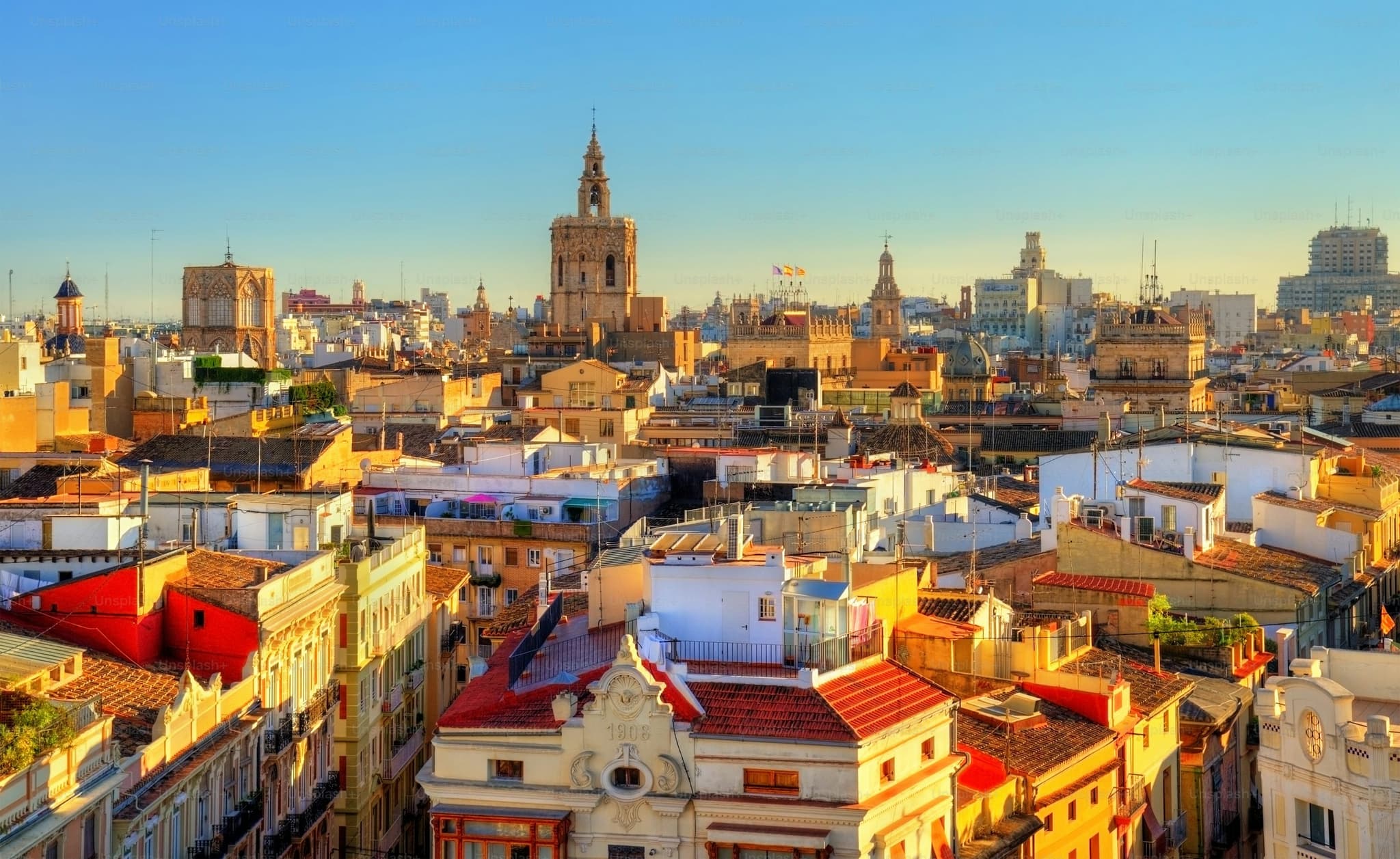
Living in Valencia, Spain: City Profile for Foreign Nationals
Valencia is the third-largest city in Spain and the capital of the Valencian Community. Located on the eastern Mediterranean coast, it strikes a balance between a relaxed coastal lifestyle and a dynamic metropolitan economy. Recently designated the European Green Capital (2024), the city is famous for its diverting of the Turia riverbed into a massive 9-kilometer linear park, creating a unique urban layout. For foreign nationals, Valencia offers a more affordable alternative to Madrid and Barcelona, though costs have risen significantly since 2023.
City Overview and Demographics
The municipality of Valencia has a population of approximately 830,000 inhabitants, with a metropolitan area reaching 1.6 million. It is relatively flat, making it one of the most bicycle-friendly cities in Europe.
Demographics: The foreign population is significant, estimated at around 14-16% of residents. The city has a rapidly growing community of "digital nomads" and northern European retirees, alongside long-established communities from Latin America (Colombia, Ecuador) and Romania.
Districts and Housing Market
Valencia's districts are diverse, ranging from historic mazes to modern beachside grids. The rental market is currently tight due to high international demand.
Ciutat Vella (Old City)
The historic center containing the Cathedral and Central Market. It is beautiful but noisy and tourist-heavy. Many buildings are historic and may lack elevators or modern insulation.
L'Eixample (Ruzafa)
Ruzafa is the trendiest neighborhood in Valencia, known for its bakery cafes, art galleries, and nightlife. It is extremely popular with young expats and professionals, making it one of the most expensive areas to rent.
Pobles Marítims (El Cabanyal)
The old fishermen's quarter near the beach. It features colorful tiled houses and a bohemian vibe. While it is gentrifying rapidly, it still offers a distinct village atmosphere separate from the main city center.
Quatre Carreres
Home to the City of Arts and Sciences. This area features modern high-rise apartment blocks with swimming pools (*residenciales*), wide avenues, and shopping malls. It is popular with families.
Benimaclet
A former village absorbed by the city, now the student hub due to its proximity to the universities. It has a strong community feel, affordable bars, and lower rent prices than the center.
Average Rental Costs (January 2026 Estimates)
While historically cheap, Valencia's rental prices have surged. Landlords typically require proof of solvency (Spanish work contract or significant savings).
Note: Currency conversions are calculated at an approximate rate of €1.00 = $1.04 USD.
- 1-Bedroom Apartment (Ruzafa/Center): €1,100 – €1,400 ($1,144 – $1,456 USD) per month.
- 1-Bedroom Apartment (Benimaclet/Outer Areas): €800 – €1,000 ($832 – $1,040 USD) per month.
- 3-Bedroom Apartment (Family Standard): €1,200 – €1,600 ($1,248 – $1,664 USD) per month.
- Room in Shared Flat: €350 – €550 ($364 – $572 USD) per month.
Public Transport (SUMA Card)
Valencia has fully integrated its transport network under the SUMA card system, which covers the Metro, Tram, EMT buses, and Renfe Cercanías (commuter trains).
The SUMA Card
A single card for all transport modes.
Cost: €10.00 for a "SUMA 10" pass (10 trips) + €2.00 for the physical card deposit.
Zone A: Covers the entire city of Valencia, the beach, and the immediate suburbs. The airport is in Zone +.
Metrovalencia
Combines underground subway lines and surface trams (Lines 4, 6, 8, 10).
Airport Connection: Lines 3 and 5 connect the airport directly to the city center (Xàtiva/Colón) in approximately 20 minutes.
EMT City Buses
The red buses cover the entire city.
Single Ticket: €1.50 ($1.56 USD).
With SUMA 10: Approx. €0.80 ($0.83 USD) per trip including transfers.
Labor Market and Economy
Valencia's economy is diverse, with strong industrial and logistical roots.
Key Sectors:
- Logistics and Industry: The Port of Valencia is the busiest container port in the Mediterranean. The Ford factory in Almussafes (south of the city) acts as a major anchor for the automotive supply chain.
- Technology and Startups: The "Marina de Empresas" is a major entrepreneurial hub located at the port, backed by private investment (Mercadona). It hosts accelerators and numerous tech startups.
- Agriculture and Export: The surrounding region is the center of citrus production in Spain, driving a robust export and food processing industry.
Language: While the tech sector is English-friendly, general employment requires Spanish. Valencia is bilingual (Valencian/Catalan and Spanish), but for business and daily life, Spanish is the primary language used.
Administrative Locations for Foreigners
Valencia has distinct offices for different procedures. Expect long wait times for appointments.
Foreigners Office (Immigration)
- Calle Bailén, 9: Located next to the Nord Train Station. This is the main National Police station for TIE card issuance and fingerprinting.
- Calle Gremis, 6: Located in the Vara de Quart industrial estate. This office often handles the initial processing of residency applications and asylum requests.
Municipal Registration (Empadronamiento)
Registration can be done at the Town Hall or district offices ("Juntas Municipales").
Main Locations:
- Ayuntamiento: Plaza del Ayuntamiento, 1.
- Tabacalera: Calle Amadeo de Saboya, 11 (A large administrative complex).
Procedure: Appointments are mandatory and are released on the city council website.
Official Resources
- Ajuntament de València – Official city council portal for appointments and *empadronamiento*.
- Metrovalencia – Maps, schedules, and route planner.
- EMT València – Bus routes and transport news.
- Cita Previa Extranjería – Government portal for booking immigration appointments.
- Visit Valencia – Official tourism and city guide.