
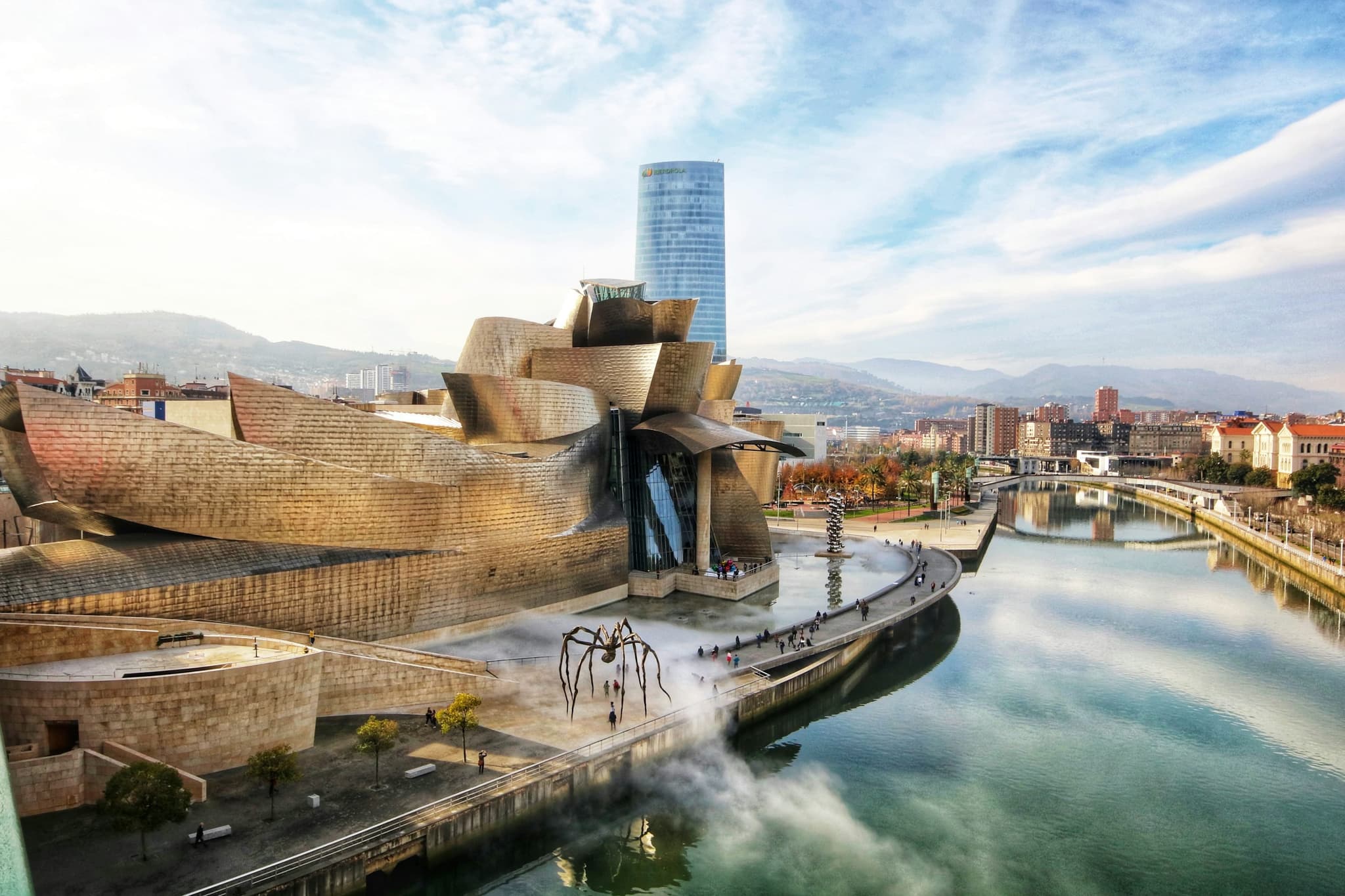
Living in Bilbao, Spain: City Profile for Foreign Nationals
Bilbao (*Bilbo* in Basque) is the largest city in the Basque Country and the capital of the province of Biscay. Once an industrial heavyweight, the city has undergone a massive urban transformation over the last 30 years, evolving into a center for design, services, and culture. For foreign nationals, Bilbao offers a high quality of life with a distinct cultural identity, significantly less tourist congestion than Barcelona, and a cooler, greener climate.
City Overview and Demographics
The municipality of Bilbao has a population of approximately 347,000, with the greater metropolitan area reaching nearly 1 million inhabitants. It is located in the north of Spain, surrounded by green mountains and close to the Bay of Biscay.
Demographics: The foreign population in Bilbao is growing but remains lower than in Madrid or Barcelona, constituting roughly 12-14% of the total. Major communities include nationals from Colombia, Morocco, Bolivia, and Romania. The city is officially bilingual; while Spanish is the dominant language for daily interaction, Basque (*Euskera*) is widely used in education, public administration, and cultural events.
Districts and Housing Market
Bilbao is a compact city. The estuary (La Ría) divides the city into two main areas: the historic right bank and the modern left bank. The housing market is expensive compared to the national average due to limited space and high demand.
Abando and Indautxu
The modern commercial center of the city (Ensanche). This area features wide avenues, grand architecture, and high-end shopping (Gran Vía). It is the most expensive area to live in, popular with professionals and families seeking proximity to international offices.
Casco Viejo (Seven Streets)
The medieval quarter known for its narrow pedestrian streets, bars, and lively atmosphere. While charming and central, it can be noisy at night and some older buildings lack elevators.
Deusto
Located across the river from Abando, Deusto is a university district (University of Deusto) with a younger vibe. It offers a balance of residential quiet and student life, with slightly more affordable rents than the center.
Uribarri and Santutxu
Densely populated residential neighborhoods located on the slopes surrounding the center. These areas are significantly cheaper and offer authentic local living, though the steep hills make them less accessible for those with mobility issues (though many public elevators exist).
Average Rental Costs (January 2026 Estimates)
Rental prices in Bilbao are the highest in northern Spain. Proof of financial solvency is strictly enforced by landlords.
Note: Currency conversions are calculated at an approximate rate of €1.00 = $1.04 USD.
- 1-Bedroom Apartment (Central/Abando): €1,000 – €1,300 ($1,040 – $1,352 USD) per month.
- 1-Bedroom Apartment (Outer Districts): €750 – €950 ($780 – $988 USD) per month.
- 3-Bedroom Apartment (Family Standard): €1,200 – €1,600 ($1,248 – $1,664 USD) per month.
- Room in Shared Flat: €350 – €550 ($364 – $572 USD) per month.

Public Transport (Metro Bilbao & Barik)
Bilbao boasts an exceptionally clean, safe, and punctual public transport system managed by the Consorcio de Transportes de Bizkaia (CTB).
The Barik Card
The essential contactless travel card for Bilbao and the Biscay province. It is valid on the Metro, Bilbobus (city buses), Bizkaibus (provincial buses), and the tram.
- Cost: The physical card costs €3.00.
- Usage: It operates on a "wallet" system. Fares are significantly cheaper (approx. 50% less) when using Barik compared to buying single paper tickets.
- Availability: Purchasable at Metro station machines and tobacco shops (estancos).
Metro Bilbao
Designed by Sir Norman Foster, the metro system has three lines. It connects the city center to the coast (Getxo, Plentzia) and the industrial suburbs.
- Single Zone Trip (with Barik): Approx. €0.96 ($1.00 USD).
- Frequency: Trains run every 2.5–5 minutes during peak hours.
Labor Market and Economy
The Basque Country has one of the lowest unemployment rates in Spain and high industrial productivity.
Key Sectors:
- Advanced Manufacturing & Energy: The region is a hub for renewable energy (wind power), automotive components, and machine tools.
- Financial Services: Bilbao is a financial capital, home to the headquarters of BBVA (historically) and other major banking entities.
- Services & Tourism: Driven by the Guggenheim effect and culinary tourism (Michelin stars), this sector provides numerous jobs, though often with lower wages.
Language Requirement: For highly skilled technical roles, English may suffice. However, for most local employment, Spanish is mandatory. Knowledge of Basque is frequently required for public sector jobs (Osakidetza, education) and customer-facing roles.
Administrative Locations for Foreigners
Procedures in Bilbao are split between the National Police (immigration) and the City Council (registration).
Foreigners Office (Immigration)
For TIE collection, fingerprinting, and asylum requests.
- Main Location: Calle Gordóniz, 8, 48010 Bilbao.
- Note: Appointments (cita previa) are mandatory and released sporadically online.
Municipal Registration (Empadronamiento)
To register your address, you must visit the City Hall or district offices.
- Main Office: Ayuntamiento de Bilbao, Plaza Ernesto Erkoreka, 12.
- Procedure: You can book an appointment via the Bilbao.eus website or by calling 010.
Official Resources
- Bilbao City Council (Bilbao.eus) – Official portal for municipal services and registration.
- Consorcio de Transportes de Bizkaia (CTB) – Information on the Barik card and public transport integration.
- Metro Bilbao – Maps, schedules, and service updates.
- Cita Previa Extranjería – Government portal for booking immigration appointments.