
Living in Málaga, Spain: City Profile for Foreign Nationals
Málaga is the capital of the Costa del Sol and the second-largest city in Andalusia. Historically known as a sun-and-sand tourist destination, it has successfully rebranded itself over the last decade as "Europe's Silicon Valley of the South" due to the rapid growth of the Málaga Tech Park (PTA). For foreign nationals, Málaga offers a unique combination of a relaxed Mediterranean lifestyle, a booming international job market in the technology sector, and a warm, subtropical climate.
City Overview and Demographics
The municipality of Málaga has a population of approximately 592,000 inhabitants. Unlike the surrounding resort towns (like Marbella or Fuengirola), Málaga is a functioning working city that remains active year-round.
Demographics: Foreign nationals make up approximately 15.7% of the city's population, a lower percentage than in the smaller coastal towns nearby, but the number is rising rapidly due to the influx of remote workers and tech professionals. Significant foreign communities include nationals from Italy, Ukraine, the United Kingdom, Morocco, and China.
Districts and Housing Market
Málaga's housing market has seen the sharpest price increases in Spain during 2024 and 2025. Finding long-term rentals is challenging as many landlords prefer short-term tourist rentals.
Centro Histórico and Soho
The cultural heart of the city. It is pedestrian-friendly, filled with museums (Picasso, Thyssen), and vibrant nightlife. Housing here is expensive, and noise levels are high. Soho is the "arts district" located between the center and the port, popular with younger professionals.
La Malagueta
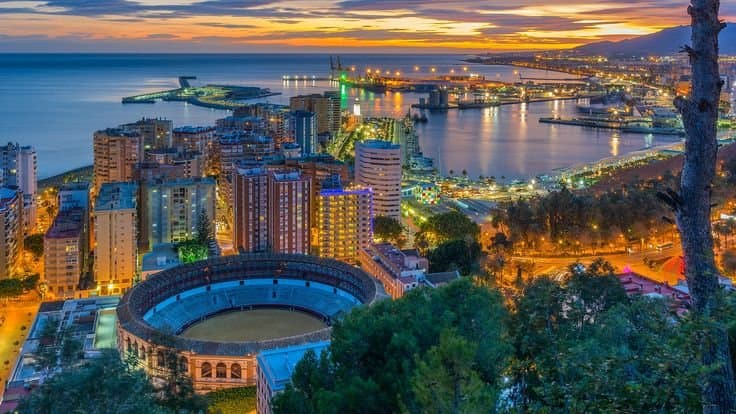
An exclusive high-rise district located on the beach, just east of the center. It offers luxury apartments with sea views and is close to the bullring. It is one of the most expensive addresses in the city.
Teatinos
The university district located in the west. It is a modern area with wide avenues, new apartment blocks with pools, and a high concentration of students and young families. It is known for its thriving tapas scene and good Metro connection.
Málaga East (Pedregalejo / El Palo)
Former fishing villages that have been absorbed by the city. They retain a low-rise, traditional atmosphere with beachside houses. These areas are relaxed and very popular with expat families, though traffic into the center can be slow.
Carretera de Cádiz (Huelin)
The most densely populated working-class district. Located west of the center near the sea, it offers more affordable housing and excellent public transport connections, though it lacks the aesthetic charm of the historic center.
Average Rental Costs (January 2026 Estimates)
Prices in Málaga have risen significantly, pushing many residents to surrounding towns. Proof of income is strictly required.
Note: Currency conversions are calculated at an approximate rate of €1.00 = $1.04 USD.
- 1-Bedroom Apartment (Center/Soho/Malagueta): €1,100 – €1,400 ($1,144 – $1,456 USD) per month.
- 1-Bedroom Apartment (Teatinos/Huelin): €850 – €1,050 ($884 – $1,092 USD) per month.
- 3-Bedroom Apartment (Family Standard): €1,300 – €1,700 ($1,352 – $1,768 USD) per month.
- Room in Shared Flat: €400 – €600 ($416 – $624 USD) per month.
Public Transport (Consorcio & EMT)
Public transport is managed by the Consorcio de Transporte Metropolitano del Área de Málaga. The system includes buses, the Metro, and Cercanías trains.
The Green Card (Tarjeta Consorcio)
This rechargeable card is essential for residents. It reduces fares significantly compared to single tickets and allows transfers between buses and the Metro.
Cost: €1.50 deposit to acquire the card.
Where to buy: Tobacco shops (estancos) and Metro machines.
Metro de Málaga
A light rail system with two lines (L1 and L2) that connect the center (Atarazanas) to the University/Tech Park area and the populous western districts.
Single Ticket: €1.35 ($1.40 USD).
With Consorcio Card: Approx. €0.82 ($0.85 USD).
City Buses (EMT)
The blue EMT buses cover the entire city.
Single Ticket: €1.40 ($1.46 USD) payable on board (card only in many cases).
With Consorcio Card: Approx. €0.66 ($0.69 USD) including free transfers.
Labor Market and Economy
Málaga is the economic engine of Andalusia, driven by two distinct sectors.
Málaga Tech Park (PTA): Located in Campanillas, this park hosts over 600 companies, including major offices for Oracle, Google, Capgemini, and Ericsson. It employs over 20,000 people. English is the working language for many of these multinational roles.
Tourism and Services: Remains a massive employer, particularly in hospitality, real estate, and airport services. These jobs are often seasonal and require fluency in Spanish and often a third language (German, French, or Scandinavian languages).
Administrative Locations for Foreigners
Málaga has specific offices for immigration procedures, which are separate from the regular police stations.
Foreigners Office (Oficina de Extranjería)
- Address: Calle Mauricio Moro Pareto, 13, 29006 Málaga.
- Functions: Handling residency applications, TIE card issuance, and EU registry certificates. It is located near the bus station.
- Note: Appointments (cita previa) are notoriously difficult to obtain. Many foreigners use a Gestor (administrative agent) to facilitate the process.
Municipal Registration (Empadronamiento)
To register your address, you must visit an OMAC (Oficina Municipal de Atención a la Ciudadanía).
Main Locations:
- OMAC Centro: Avenida de Cervantes, 4.
- OMAC Tabacalera: Calle Concejal Muñoz Cerván, 3.
Procedure: Appointments are mandatory and can be booked via the city council website.
Official Resources
- Málaga Tourism & City Info – Official city guide and services.
- Consorcio de Transporte (CTMAM) – Routes, timetables, and Green Card info.
- Metro de Málaga – Maps and station information.
- Cita Previa Extranjería – Government portal for booking immigration appointments.
- Málaga Tech Park (PTA) – Information on companies and employment in the tech sector.