

Emergency and Safety Services in Spain
Navigating the emergency and safety infrastructure in a foreign country is essential for residency and long-term security. Spain maintains a highly coordinated network of public safety services that integrate local, regional, and national resources. This guide outlines the primary contact methods, the various police jurisdictions, and the procedures for reporting incidents as of January 2026.
The Universal Emergency Number: 112
The number 112 is the primary emergency contact in Spain. It is a toll-free service available 24/7 from any landline or mobile phone, even those without a SIM card or with a locked screen. This number acts as a central dispatcher for police, ambulance services, and fire brigades.
Key features of the 112 service include:
- Multilingual Support: Operators in major cities and tourist areas (such as Madrid, Barcelona, and the Costa del Sol) are typically trained to handle calls in English, French, and German.
- Geolocation: The system can automatically locate the caller's position, which is critical for incidents occurring on highways or in rural areas.
- Single Point of Contact: You do not need to determine which police force is required; the dispatcher will assign the appropriate unit based on the nature of the emergency.
Specialized Emergency Contacts
While 112 is the standard for immediate life-threatening situations, several direct-dial numbers exist for specific services. These may be faster if you know exactly which department you require.
- 091 – National Police (Policía Nacional): For reporting urban crimes such as robbery, assault, or domestic violence.
- 092 – Local Police (Policía Local): For municipal matters, traffic management within towns, and local disturbances.
- 062 – Civil Guard (Guardia Civil): For emergencies in rural areas, on national highways, or at sea.
- 080 or 085 – Fire Department (Bomberos): Direct line to fire and rescue services (varies by province).
- 061 – Health Emergencies (Urgencias Médicas): Specifically for medical crises and ambulance dispatch in some regions.
Understanding Police Forces in Spain
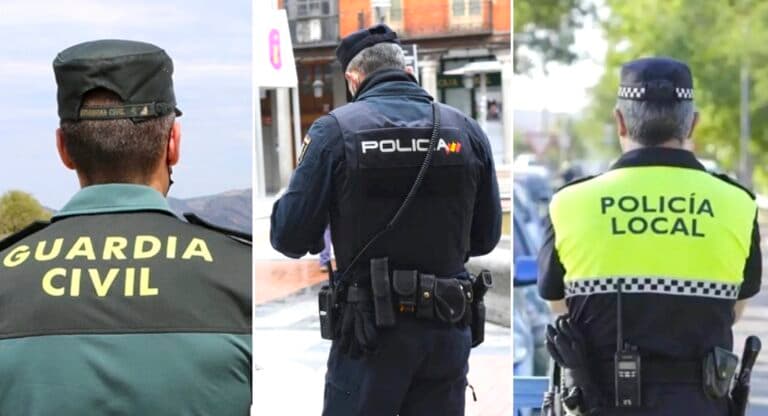
Spain utilizes a multi-layered policing system. Understanding which force is responsible for what can prevent confusion when seeking administrative or protective assistance.
Policía Nacional (National Police)
The Policía Nacional operates primarily in urban areas and provincial capitals. They handle major criminal investigations, national security, and all matters related to immigration and identity documents (including NIE and TIE processing for foreigners).
Guardia Civil (Civil Guard)
The Guardia Civil is a gendarmerie-style force with military status. They are responsible for rural areas, coastal surveillance, customs, and traffic control on intercity highways. If you are involved in a traffic accident outside a major city, the Guardia Civil will likely be the responding agency.
Policía Local (Local Police)
Also known as Policía Municipal or Guàrdia Urbana, these officers are managed by the local Town Hall (Ayuntamiento). Their duties include local traffic, protection of municipal authorities, and enforcing local ordinances (noise complaints, parking, etc.).
Autonomous Police Forces
In certain regions, autonomous police forces hold primary jurisdiction, often replacing many functions of the National Police:
- Mossos d'Esquadra: Catalonia
- Ertzaintza: Basque Country
- Policía Foral: Navarre
Reporting a Crime: The Denuncia
If you are a victim of a crime that is not an immediate emergency, you must file an official report known as a denuncia. This document is required for insurance claims and legal proceedings.
There are three primary ways to file a denuncia:
- In Person: Visit the nearest Comisaría (Police Station). If you do not speak Spanish, you have the right to request an interpreter, though availability is not guaranteed immediately.
- By Phone: The National Police offer a dedicated line for foreign tourists and residents (902 102 112). Reports can be made in several languages, but you must visit a station within 72 hours to sign and collect the official document.
- Online: Through the Virtual Complaints Office. Note that violent crimes or crimes where the perpetrator is known cannot be reported online.
Note: If you have lost your passport or residency card (TIE), you must report the loss to the police immediately to prevent identity theft and to initiate the replacement process.
Assistance for Foreigners (SATE)
The SATE (Servicio de Atención al Turista Extranjero) is a specialized service provided by the National Police and local tourism boards. These offices are designed specifically to assist foreign nationals who have been victims of crime. They provide help with cancelling credit cards, contacting consulates, and providing psychological support in the victim's own language.
Digital Safety Tools
The Spanish Ministry of Interior provides a mobile application called AlertCops. This app allows users to send an alert with their exact GPS coordinates directly to the nearest police operations center. It includes a chat feature and the ability to send photos or videos of an ongoing incident. It is highly recommended for hikers, solo travelers, and residents in remote areas.
Costs and Fees
General emergency services (police, fire, and basic ambulance transport for life-threatening issues) are funded by the state and are free at the point of delivery for all residents and visitors.
However, there are specific exceptions regarding "negligent" rescues. For example, if a rescue operation is required because a person ignored weather warnings or entered a restricted area, regional governments may charge for the service. For instance, in regions like the Basque Country or Asturias, a helicopter rescue due to negligence can cost approximately 2,400 EUR ($2,520 USD, Jan 2026) per hour of operation.
Summary Checklist
- Immediate Danger: Call 112.
- Minor Crime: File a denuncia at the nearest Policía Nacional or Mossos d'Esquadra station.
- Documentation: Keep a digital copy of your passport and NIE/TIE on your phone to assist police in identification.
- App: Download AlertCops from the official App Store or Google Play Store.