
Introduction to Entrepreneurship in Spain
Spain remains a significant destination for foreign investment and entrepreneurship within the European Union. For foreign nationals, the process of starting a business involves navigating specific administrative tiers, including tax authorities, social security, and the mercantile registry. As of 2025 and 2026, regulations continue to favor digital integration, allowing many steps to be completed electronically through the Sistema de Tramitación Telemática (STT).
/div>
Legal Structures for Foreign Entrepreneurs
Choosing the correct legal form is the first critical decision. The choice impacts the founder’s liability, initial capital requirements, and taxation methods. The two most common forms for foreigners are the Autónomo and the Sociedad de Limitada (SL).
Individual Entrepreneur (Autónomo)
The Autónomo is a self-employed individual. This is the simplest and least expensive way to start a business, as it requires no minimum initial capital. However, the owner has unlimited liability, meaning personal assets can be used to cover business debts.
- Initial Capital: 0 EUR ($0 USD, Jan 2026).
- Registration: High speed, often completed within 24–48 hours.
- Taxation: Personal Income Tax (IRPF).
Limited Liability Company (Sociedad de Responsabilidad Limitada - SL)
The SL is the most popular corporate structure for small to medium-sized businesses. It protects the personal assets of the shareholders. Following the "Create and Grow" Law (Ley Crea y Crece), the strict minimum capital requirement was lowered to facilitate entrepreneurship.
- Initial Capital: Technically 1 EUR ($1.08 USD, Jan 2026), though companies must legally allocate 20% of profits to a legal reserve until the capital reaches 3,000 EUR ($3,240 USD, Jan 2026).
- Liability: Limited to the capital contributed.
- Taxation: Corporate Tax (Impuesto sobre Sociedades), generally 25%, with reduced rates of 15% for new companies in the first two years of profit.
Essential Administrative Requirements
Before any commercial activity can begin, foreign nationals must secure specific identification documents. These requirements vary slightly depending on whether the entrepreneur is an EU/EEA citizen or a non-EU national.
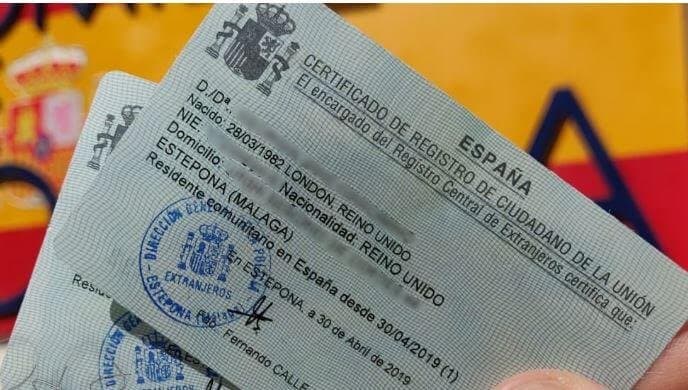
Tax Identification Number (NIE)
The Número de Identidad de Extranjero (NIE) is mandatory for all financial and legal transactions in Spain. It is required for opening bank accounts, signing notary deeds, and registering with the Tax Agency. Non-resident foreigners may apply for a non-resident NIE if they do not intend to reside in Spain but wish to open a company.
Business Visa and Residency
For non-EU nationals, simply having an NIE does not grant the right to live and work in Spain. Individuals must obtain a specific work authorization, such as the "Self-Employed Work Visa" or the "Entrepreneur Visa" under the Law 14/2013, which is designed for innovative projects with economic interest for Spain.
Step-by-Step Registration Process
Setting up a corporate entity (SL) follows a standardized sequence of legal steps. While an Autónomo registration is simpler (involving only Tax Agency and Social Security signup), a company requires the following:
- Certificate of Uniqueness: Request a Certificado de Denominación Social from the Central Mercantile Registry to ensure the company name is not already in use. Cost: Approximately 16 EUR ($17.28 USD, Jan 2026).
- Bank Account: Open a Spanish business bank account and deposit the initial share capital (if choosing to deposit the traditional 3,000 EUR).
- Public Deed of Incorporation: Sign the incorporation documents before a Spanish Notary. Notary fees vary but typically range from 300 EUR ($324 USD, Jan 2026) to 600 EUR ($648 USD, Jan 2026).
- Obtain CIF (Tax ID): Request a provisional Código de Identificación Fiscal (CIF) from the Tax Agency (Hacienda).
- Mercantile Registry: Register the public deed at the Registro Mercantil. This process usually takes 15 days.
Taxation and Social Security
Once the business is registered, the entrepreneur has ongoing obligations to the Spanish state. Failure to comply with these can result in significant penalties.
Social Security Contributions
Business owners must register for the Special Regime for Self-Employed Workers (RETA). Since 2023, contributions are based on "real earnings." In 2025/2026, the minimum monthly contribution for those with low earnings starts at approximately 230 EUR ($248 USD, Jan 2026). However, new Autónomos may qualify for a "Flat Rate" (Tarifa Plana) of 80 EUR ($86.40 USD, Jan 2026) per month for the first 12 months.
VAT (IVA) Compliance
Most commercial activities are subject to Value Added Tax (IVA). The standard rate is 21%. Businesses must file quarterly IVA returns and an annual summary. Some sectors, such as education or healthcare, may be exempt.
Exceptions and Special Cases
The Spanish Startup Law (Ley de Startups) provides specific exceptions for innovative, scalable businesses. These companies may benefit from a reduced Corporate Tax rate of 15% for up to four years and total exemption from the NIE requirement for non-resident investors (a NIF is issued instead via a simplified process).
Useful Resources
For official information and digital filings, entrepreneurs should refer to these institutional portals:
- Agencia Tributaria (Spanish Tax Agency)
- Seguridad Social (Social Security)
- PAE (Point of Entrepreneur Advice)
- Registro Mercantil Central (Central Mercantile Registry)
Note: Administrative costs and exchange rates are subject to market fluctuations. It is recommended to verify specific costs at the time of application.