
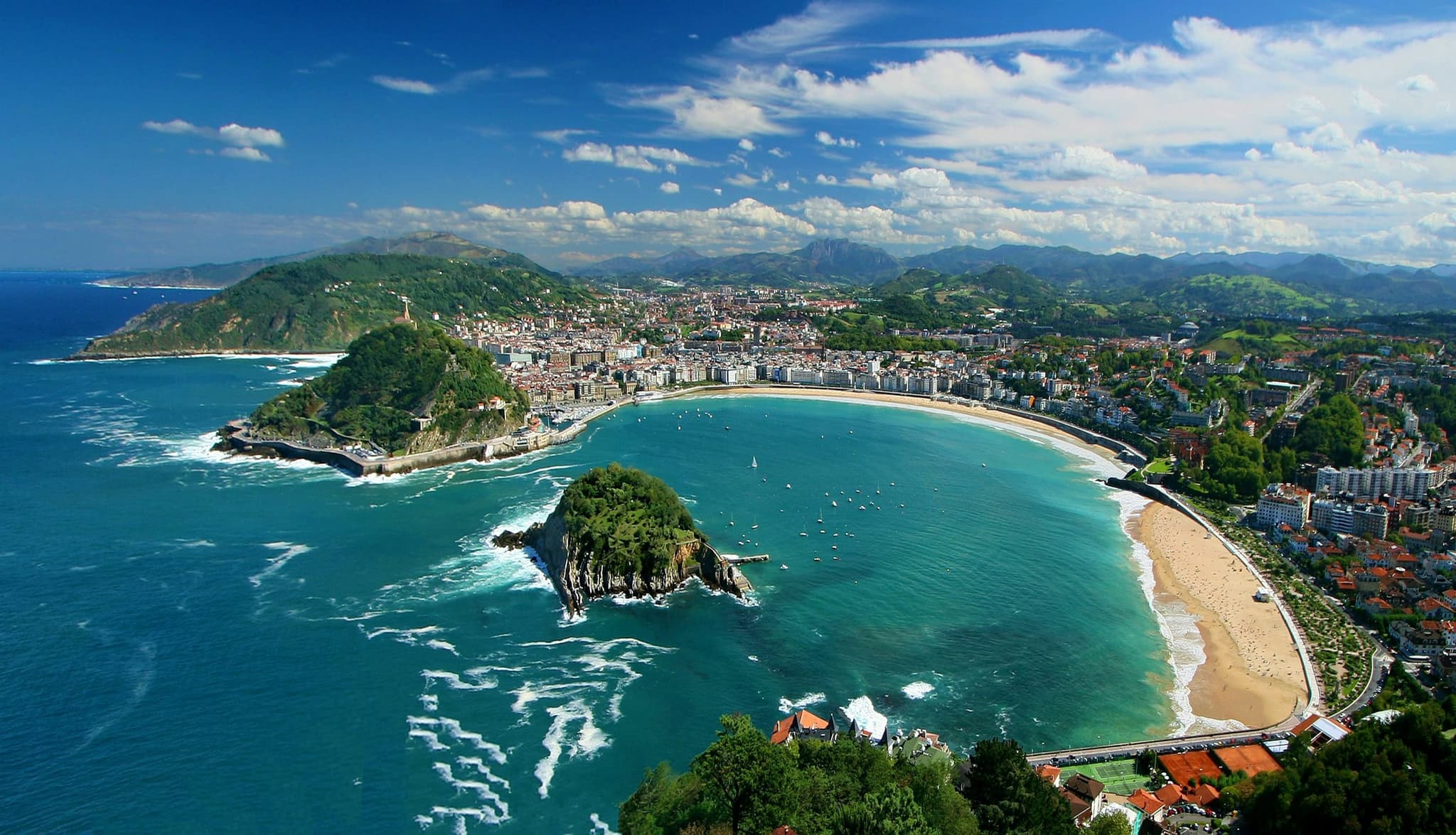
Living in San Sebastián (Donostia), Spain: City Profile for Foreign Nationals
San Sebastián (officially Donostia / San Sebastián) is a coastal city in the Basque Country, located just 20 kilometers (12 miles) from the French border. It is globally renowned for its gastronomy—holding one of the highest concentrations of Michelin stars per capita in the world—and its film festival. For foreign nationals, it offers an exceptionally high quality of life and safety, though this comes with the highest cost of living in Northern Spain.
City Overview and Demographics
The municipality has a population of approximately 188,000 inhabitants, with a metropolitan area of around 450,000. It is smaller and quieter than Bilbao but experiences intense seasonal population swells due to tourism.
Demographics: Foreign nationals make up approximately 14% of the population. The largest foreign communities include citizens from Nicaragua, Honduras, Morocco, and Italy. Due to its proximity to the border, there is also a significant community of French nationals who commute or reside part-time in the city.
Districts and Housing Market
Finding long-term housing is the primary challenge for new residents. The market is distorted by short-term vacation rentals and "seasonal contracts" (rentals available only from September to June), which forces tenants to vacate during summer.

Parte Vieja (Old Town)
The historic core filled with pintxo bars and restaurants. While culturally vibrant, it is extremely noisy at night and heavily congested with tourists. Buildings are old and often lack elevators.
Centro and Área Romántica
The downtown area featuring 19th-century Belle Époque architecture, luxury shops, and the famous La Concha beach promenade. It is the most expensive and exclusive area to live.
Gros
Located across the river, next to Zurriola Beach (the surfing beach). It has a younger, more bohemian atmosphere than the center but has become nearly as expensive due to its popularity with surfers and digital nomads.
Amara Berri
A residential district south of the center. It lacks the historic charm of other areas but offers practical living with supermarkets, flat terrain, modern apartments with elevators, and good bus connections.
Antiguo
Located at the far end of La Concha bay. It functions almost like a separate village with a strong local community feel and proximity to Ondarreta beach and the university campus.
Average Rental Costs (January 2026 Estimates)
San Sebastián frequently rivals Madrid and Barcelona as the most expensive city in Spain per square meter.
Note: Currency conversions are calculated at an approximate rate of €1.00 = $1.04 USD.
- 1-Bedroom Apartment (Central/Gros): €1,200 – €1,600 ($1,248 – $1,664 USD) per month.
- 1-Bedroom Apartment (Amara/Outer Areas): €950 – €1,200 ($988 – $1,248 USD) per month.
- Room in Shared Flat: €500 – €750 ($520 – $780 USD) per month.
Warning on Seasonal Rentals: Many advertisements listed as "Student Flat" or "Temporary" require you to leave in June. Verify that your contract is for "Vivienda Habitual" (permanent residence) to avoid eviction before summer.
Public Transport (Mugi System)
The transport network is efficient and unified under the Mugi card system.
The Mugi Card
A single contactless card valid for Dbus (city buses), Lurraldebus (provincial buses), and Euskotren (regional trains).
Discount System: The card rewards frequent use. The more trips you make per month, the cheaper each subsequent trip becomes.
Cost: The card costs €5.00 to purchase and must be loaded with credit.
Dbus (City Buses)
Buses are the main mode of transport within the city.
Cash Fare: €1.85 ($1.92 USD).
With Mugi Card: Approx. €1.26 ($1.31 USD) for the first trips, dropping to ~€0.60 after frequent usage.
Euskotren (The "Topo")
A narrow-gauge train line that acts like a metro, connecting San Sebastián to France (Hendaye) in the east and towards Bilbao in the west. It is essential for commuters living in nearby towns like Rentería or Irún.
Labor Market and Economy
While tourism is visible, the city has a robust science and technology sector.
Key Sectors:
- R&D and Science: The Miramón Technology Park hosts numerous biotechnology and nanoscience research centers (e.g., CIC nanoGUNE). This sector attracts international researchers and engineers.
- Gastronomy & Food Tech: Beyond restaurants, the city hosts the Basque Culinary Center, a pioneering academic institution for gastronomic sciences.
- Tourism: Provides high volume employment but often at lower wages compared to the industrial or tech sectors.
Language: English is common in the technology and academic sectors. In the service industry, Spanish is mandatory, and knowledge of Basque (*Euskera*) is often required for customer-facing roles in local administration or retail.
Administrative Locations for Foreigners
Most immigration procedures take place at the Subdelegation of the Government.
Foreigners Office (Oficina de Extranjería)
- Address: Plaza de Pío XII, 6, 20010 Donostia.
- Functions: Processing of residency permits, TIE card collection, and student visas. Appointments (cita previa) are mandatory.
Municipal Registration (Empadronamiento)
Registration is processed at the City Hall or "Udalinfo" offices.
- Main Office: Calle Ijentea, 1 (City Hall - Alderdi Eder gardens).
- Procedure: Appointments can be booked via the city website or by calling 010.
Official Resources
- Donostia.eus (City Council) – Official portal for municipal services and registration info.
- Mugi System – Official site for the transport card, fare calculator, and routes.
- Dbus – City bus schedules and route planner.
- Euskotren – Schedules for the regional train (Topo) connecting to France and Bilbao.
- Cita Previa Extranjería – Government portal for booking immigration appointments.