

Integration and Language in Spain
Integration into Spanish society is a multi-faceted process involving legal requirements, linguistic proficiency, and social adaptation. For foreign nationals, understanding the balance between national standards and regional variations is essential for both residency stability and daily life. As of 2025 and 2026, the Spanish government continues to emphasize "social roots" (*arraigo*) and documented integration efforts as key components of the immigration framework.
The Linguistic Landscape
While Castilian Spanish (Castellano) is the official language of the state, Spain is a multilingual nation. In several Autonomous Communities, other languages hold co-official status. Understanding these distinctions is vital depending on the place of residence.
Co-official Languages
- Catalan (Català): Spoken in Catalonia and the Balearic Islands.
- Valencian (Valencià): Spoken in the Valencian Community.
- Galician (Galego): Spoken in Galicia.
- Basque (Euskera): Spoken in the Basque Country and parts of Navarre.
In these regions, official administrative documents, public education, and signage are often bilingual. For foreigners, while Spanish is sufficient for legal purposes, learning the regional language is frequently viewed as a significant mark of integration and may be beneficial for employment in the public sector.
Official Integration Programs
The Spanish administration provides mechanisms for foreigners to prove their integration, which can be critical during the renewal of residence permits or when applying for permanent residency.
Informe de Esfuerzo de Integración
The "Integration Effort Report" is a document issued by the Autonomous Communities. It is used primarily when a resident cannot meet the standard economic requirements for permit renewal. It verifies that the individual has participated in training actions aimed at learning about Spanish society and its languages.
To obtain this report, foreigners usually need to complete at least 20 hours of training covering:
- Constitutional values of Spain.
- Human rights and civil liberties.
- Foreigners' rights and obligations.
- Linguistic knowledge (Spanish or co-official languages).
Language Requirements for Citizenship
For most non-Spanish speaking nationals, obtaining Spanish citizenship requires passing two specific exams administered by the Instituto Cervantes.
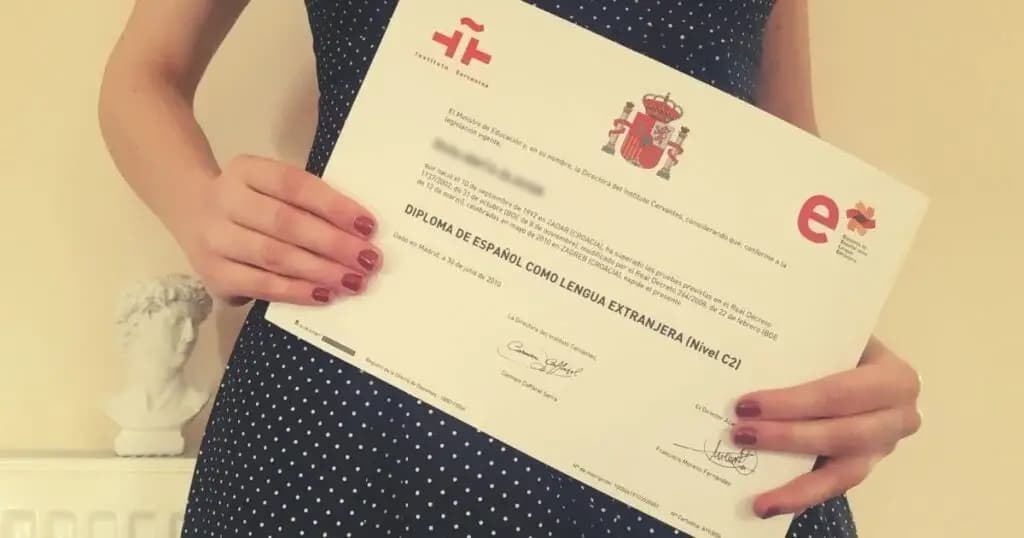
DELE (Diploma de Español como Lengua Extranjera)
Applicants must demonstrate a minimum level of A2 in Spanish. This level ensures the individual can understand commonly used expressions and participate in basic social interactions. Some nationalities (those from Spanish-speaking countries) are exempt from this requirement.
- Cost: Approximately 134 EUR ($140.70 USD, Jan 2026), though prices may vary by exam center.
CCSE (Prueba de Conocimientos Constitucionales y Socioculturales de España)
This is a "Spanishness" test consisting of 25 multiple-choice questions regarding the Spanish Constitution, geography, culture, and society. A minimum of 15 correct answers is required to pass.
- Cost: 85 EUR ($89.25 USD, Jan 2026).
- Validity: The certificate is valid for four years from the date of the exam.
Learning Resources for Foreigners
Foreigners have access to both public and private options for language acquisition. The choice often depends on the budget and the need for official certification.
Escuelas Oficiales de Idiomas (EOI)
The EOI is a nationwide network of state-run language schools. They offer high-quality instruction at subsidized rates. Enrollment usually happens once a year (June or September), and demand is high.
- Fees: Annual fees range from 70 EUR to 100 EUR ($73.50 to $105 USD, Jan 2026) depending on the region.
Private Academies and NGOs
Private language schools offer more flexible schedules but at higher costs. Additionally, many NGOs and local municipal "Centros de Apoyo a la Integración" offer free or very low-cost "Spanish for Foreigners" classes focused on functional literacy and basic communication.
Practical Steps for Social Integration
Integration extends beyond documentation. Administrative and social practices in Spain follow specific cultural rhythms that are important for newcomers to navigate.
- Empadronamiento: Registering at the local town hall (*Padrón*) is the first step of integration. It provides access to public healthcare and education and serves as official proof of residence duration.
- Social Norms: Spain operates on a unique schedule. Lunch is typically between 14:00 and 16:00, and dinner is rarely served before 21:00. Understanding these timings is essential for social integration.
- Local Associations: Joining a *Casal* (in Catalonia) or a local *Peña* (social club) is a common way to integrate into the neighborhood fabric.
Exceptions and Variations
The requirements for integration and language proficiency vary significantly based on the applicant's background:
"Nationals from Ibero-American countries, the Philippines, Equatorial Guinea, or Sephardic Jews are generally exempt from the DELE exam for citizenship, though they must still complete the CCSE exam."
For individuals with a university degree or secondary education obtained in Spain, exemptions may apply for both the DELE and CCSE, provided they can provide the relevant Spanish academic credentials.
Vulnerable Groups
Applicants who cannot read or write, or those with learning difficulties, may apply for a waiver or an adapted exam. This process usually requires a formal petition to the Ministry of Justice accompanied by supporting medical or social documentation.
For further official information on integration policies, visit the Ministry of Inclusion, Social Security and Migration.